Case study
AEM / Strategy Research OS
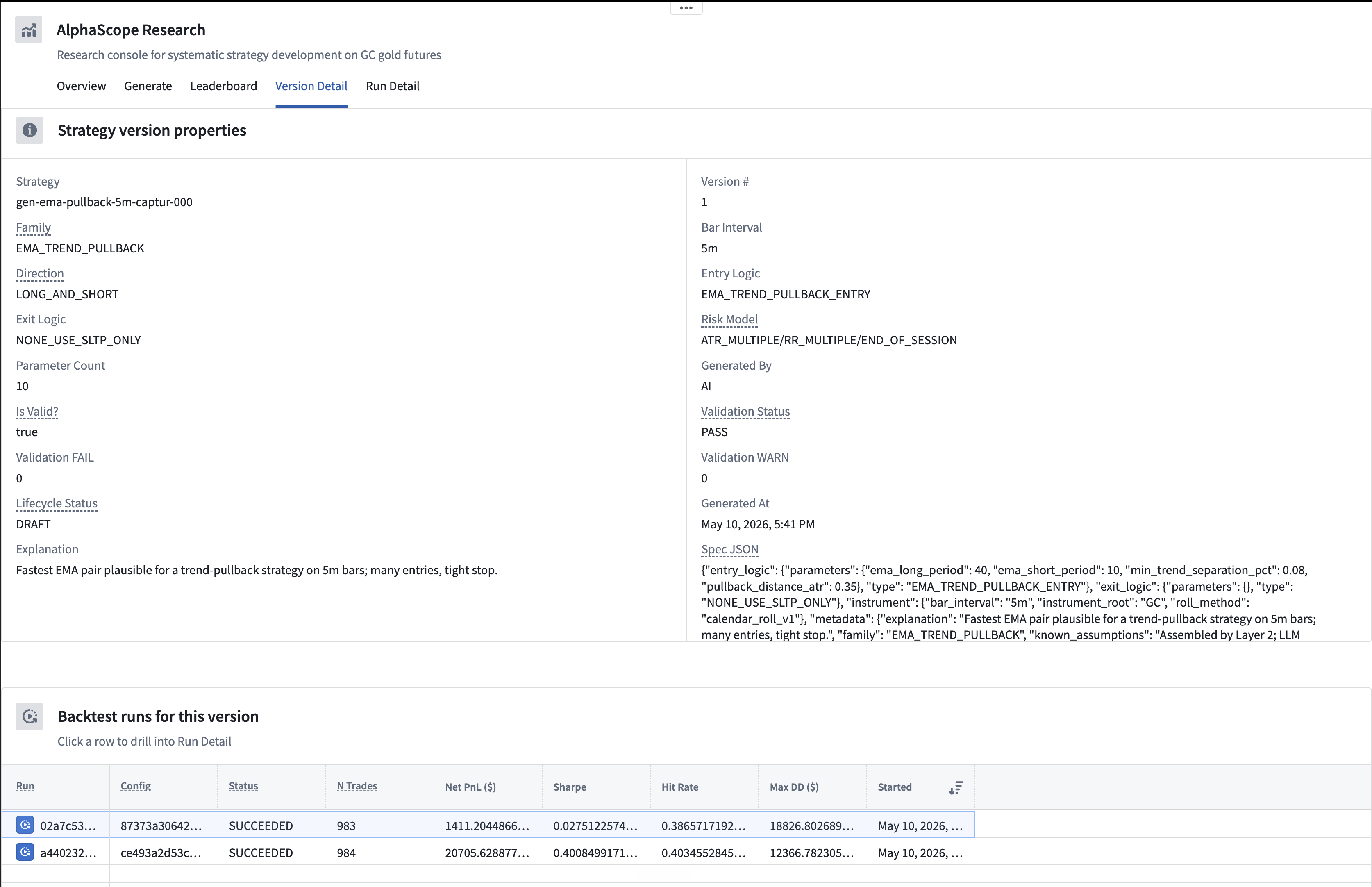
A research operating system concept for organizing strategy ideas, experiment history, validation notes, and decision records.
Overview
A structured workspace for moving trading ideas from rough hypotheses into tracked research artifacts, validation workflows, and implementation-ready notes.
Problem
Strategy research can become scattered across notebooks, chats, spreadsheets, platform scripts, and screenshots, making it hard to preserve context or compare experiments honestly.
What I Built
- A central project structure for strategy notes, test plans, assumptions, and review checkpoints.
- A workflow model for documenting hypotheses, dataset choices, validation windows, and rejection criteria.
- AI-assisted research summaries that keep final decisions auditable by a human reviewer.
Technologies Used
- Python
- pandas
- NumPy
- Market data workflows
- AI-assisted research tooling
- Structured experiment tracking
Key Technical Challenges
- Keeping research notes useful without turning the system into busywork.
- Separating exploratory analysis from claims that are ready to drive implementation.
- Designing metadata that supports comparison without inventing false precision.
What It Demonstrates
- Research system design
- Quant workflow discipline
- Practical AI-assisted engineering
- Experiment traceability
Current Status
Presented as a case-study artifact with screenshots and workflow notes; source details remain private where they include trading research context.